The short answer
New paint can improve a sound exterior, but it cannot correct active moisture, soft wood, failed joints, or loose coatings by itself. The durable order is to identify the cause, complete the needed repairs, prepare the surface, and then apply the coating system.
First decide whether the problem is paint, wood, or water
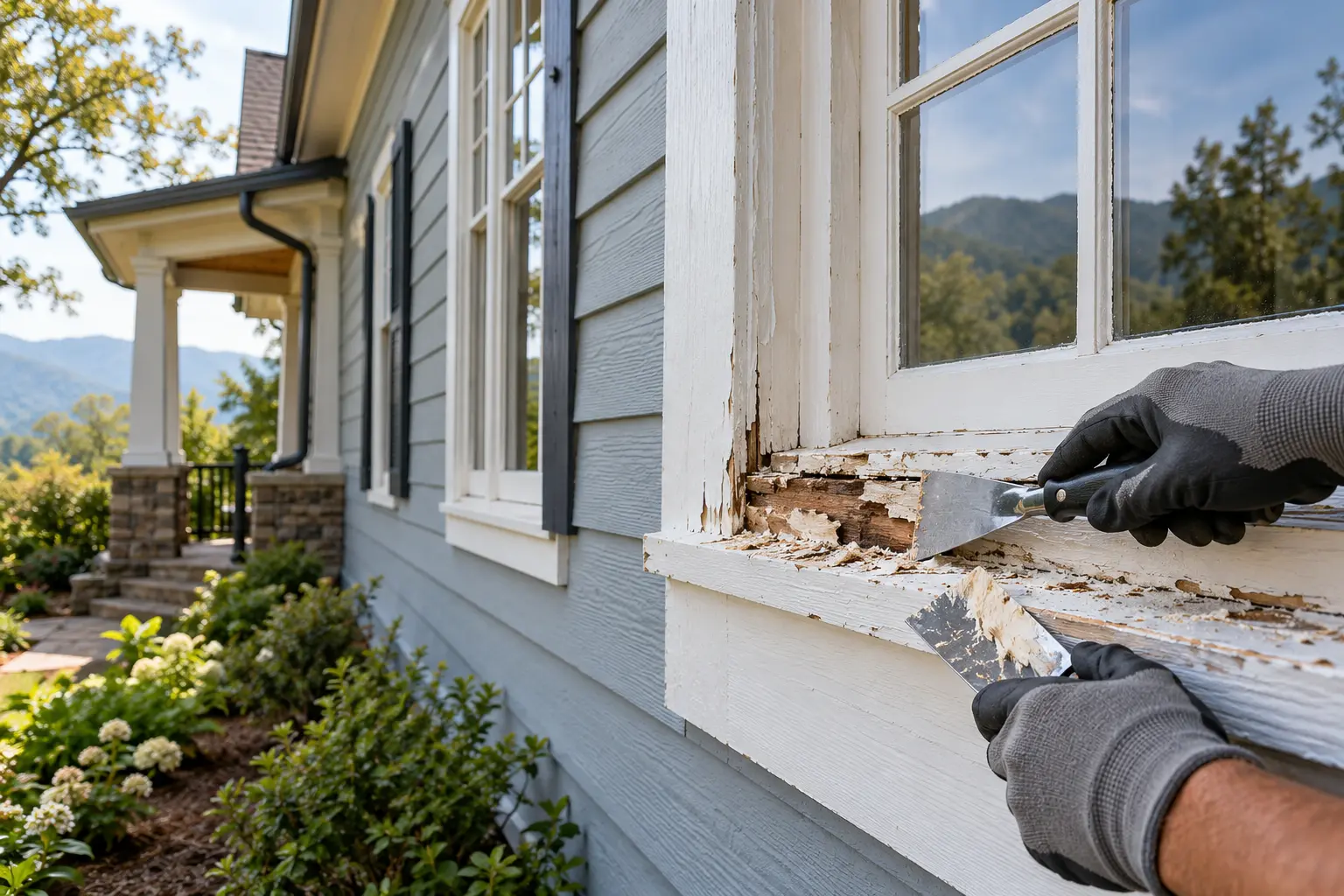
Peeling can come from several conditions: an aging coating, poor adhesion, trapped moisture, repeated wetting, missing primer, movement at joints, or a surface that was painted before it was dry. Soft trim or siding may point to decay beneath the coating, while isolated flaking can be limited to the paint film.
A walkthrough should look beyond the visible edge of the failure. Window sills, fascia, soffits, lower siding courses, porch details, roof-to-wall transitions, and areas near gutters often reveal where water is reaching the surface. Repainting without understanding that pattern can hide the symptom for a short time while the underlying condition continues.
Stop the moisture source before closing the surface
Wood should not be sealed behind primer and paint while it is still being repeatedly wetted. Failed caulk, open joints, leaking gutters, splashback, vegetation against the house, and damaged siding can all contribute to premature coating failure. Some sources may require a roofer, gutter specialist, or another qualified trade before painting begins.
The goal is not to promise that paint will waterproof the building. It is to return the paintable surfaces to a sound, reasonably dry condition and address visible openings that belong within the approved scope. A clear estimate should separate coating preparation from repairs or outside work that must happen first.
Know when wood can be repaired and when it should be replaced
A small, localized defect in otherwise stable material may have a different solution than trim that is soft through its depth, split, loose, or unable to hold fasteners. Replacement is often the more dependable choice when deterioration is extensive or the piece no longer performs as intended.
The decision should be based on the location, depth of damage, construction detail, water exposure, and how the repaired area will accept primer and paint. FullScope can identify visible wood-repair needs during the estimate and define what is included, while hidden or structural damage may require a revised scope after it is exposed.
Preparation creates the foundation for the new finish
Once repairs are complete and the surface is suitable, preparation can include cleaning, removing loose coating, feather-sanding edges, addressing failed caulk, spot priming bare areas, and checking the transition between old and new material. The exact process depends on the siding or trim, the existing coating, and the selected products.
Pressure washing can help remove dirt and surface contamination when used appropriately, but high pressure is not a substitute for scraping, repair, drying, or priming. Aggressive washing can also drive water into joints or damage wood. Cleaning method, pressure, and dry time should match the surface rather than follow one rule for every exterior.
Western North Carolina exposure changes the repair plan
Lake Norman and nearby communities can combine strong sun, heat, humidity, storms, and lakeside moisture. In the Catawba Valley, hot surfaces and fast-changing summer weather affect work windows. High Country homes may add shade, wind, elevation, freeze-and-thaw cycles, sloped access, and wood details that weather differently from one elevation to another.
Those regional conditions do not automatically require one special paint. They make surface condition, exposure, product requirements, and timing more important. The south and west sides may fade or chalk while shaded trim stays damp longer, so the estimate should evaluate the house by elevation instead of treating every wall as identical.
Ask for repairs and painting to be written as one sequence
A useful exterior proposal should identify the elevations and surfaces included, visible repair allowances, cleaning method, loose-paint removal, caulking, primer, finish coating, exclusions, access equipment, and how unexpected damage will be approved. That makes it easier to compare estimates and reduces confusion after preparation begins.
If you see peeling paint, cracked joints, soft trim, or damaged siding, schedule the inspection before the failure spreads. FullScope can review the exterior, explain which items belong before painting, and prepare a written scope for the repairs and finish work appropriate to the property.
Ready to discuss your property? Explore Exterior Painting or request a free estimate below.