The short answer
High Country painting should be planned around the property's actual elevation, exposure, materials, access, and use. A date on the calendar is only the beginning.
Evaluate exposure, not just the season
Boone and Blowing Rock properties can experience rapid weather changes, strong sun, wind, moisture, shade, and large temperature swings. Different sides of the same house may age at different rates because their exposure is not the same.
The selected primer, paint, or stain must be applied within its product requirements and given an appropriate drying window. Surface temperature and moisture matter as much as the day's forecast.
Plan access before work begins
Sloped sites, tall gables, decks, retaining walls, landscaping, narrow drives, and limited staging space can change the safest and most practical work method. Ladders, lifts, scaffolding, and material delivery should be discussed during the estimate.
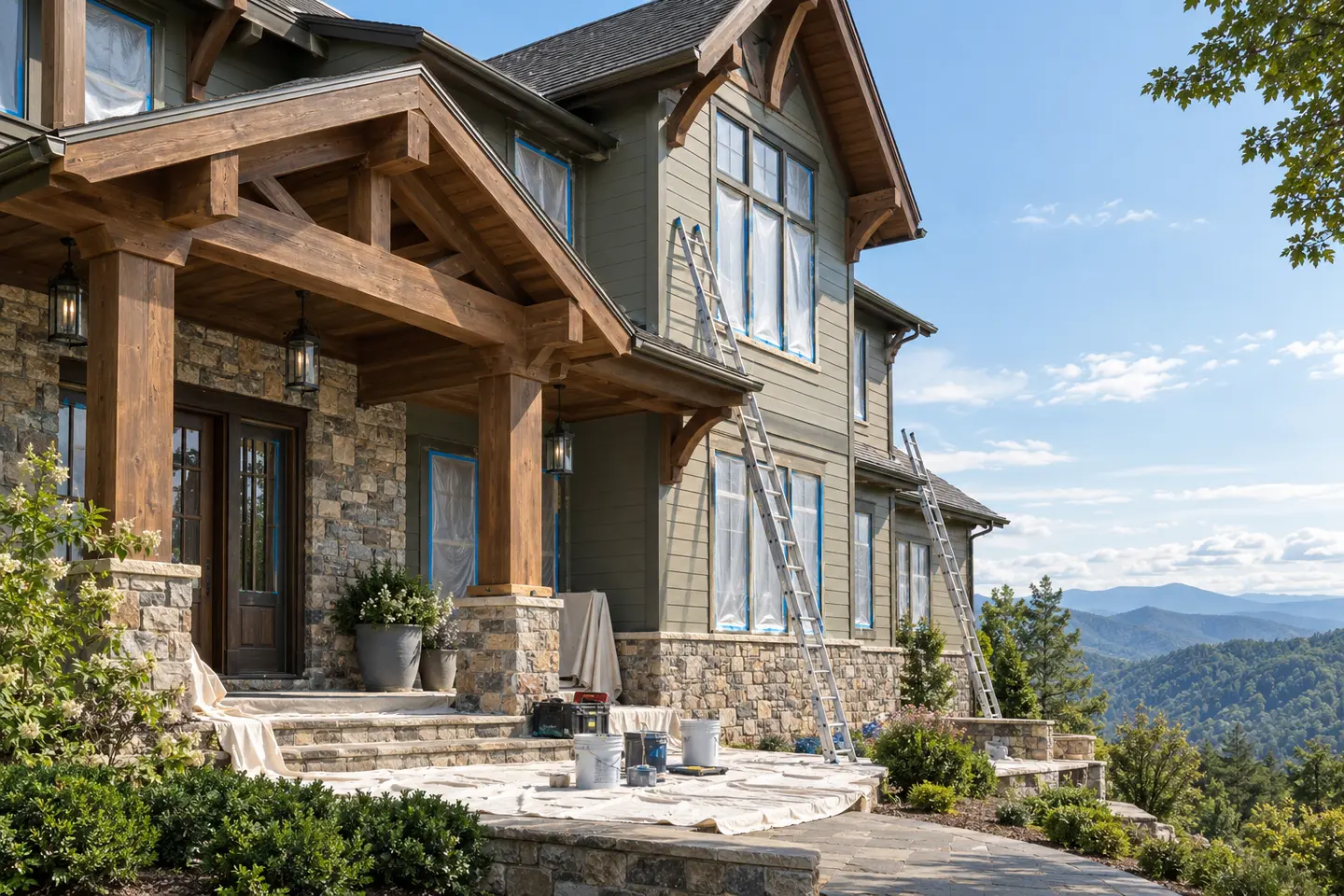
Access affects labor and sequencing, but it also affects protection. A clear plan helps safeguard roofing, stone, plants, windows, vehicles, and occupied areas while crews move around the property.
Treat wood as a system
Mountain homes often combine wood siding, beams, fascia, soffits, railings, decks, and other exposed details. Weathered fibers, failed coatings, open joints, moisture staining, and decay should be evaluated before new finish is applied.
Paint and stain behave differently and cannot be selected by color alone. Existing coating, wood condition, exposure, desired appearance, and maintenance expectations all influence preparation and product choice.
Use the home's natural light
Large windows and open mountain views can create strong interior side lighting. That light may reveal drywall joints, patching, sanding marks, or uneven sheen that would be less noticeable in a smaller, evenly lit room.
Drywall finish, primer, paint sheen, and application technique should be planned together. Sample areas can be useful when a room has dramatic daylight or a major color change.
Coordinate seasonal and occupied properties
Some High Country homes are second residences, vacation rentals, or properties with busy guest schedules. The plan should identify access, key handling, furniture movement, quiet hours, turnover dates, and who can approve colors or changes.
Exterior work also needs realistic weather flexibility. Building a small amount of schedule tolerance is better than forcing coatings onto surfaces that are too damp, cold, hot, or exposed.
Repair before the finish coat
Peeling paint, failed caulk, soft trim, damaged siding, drywall cracks, and water stains may signal work that belongs ahead of painting. Covering symptoms without addressing the surface can shorten the life of the finish.
An on-site estimate allows FullScope to review materials, exposure, access, repairs, and finish goals together, then build a scope suited to the actual mountain property.
Ready to discuss your property? Explore High Country Services or request a free estimate below.