The short answer
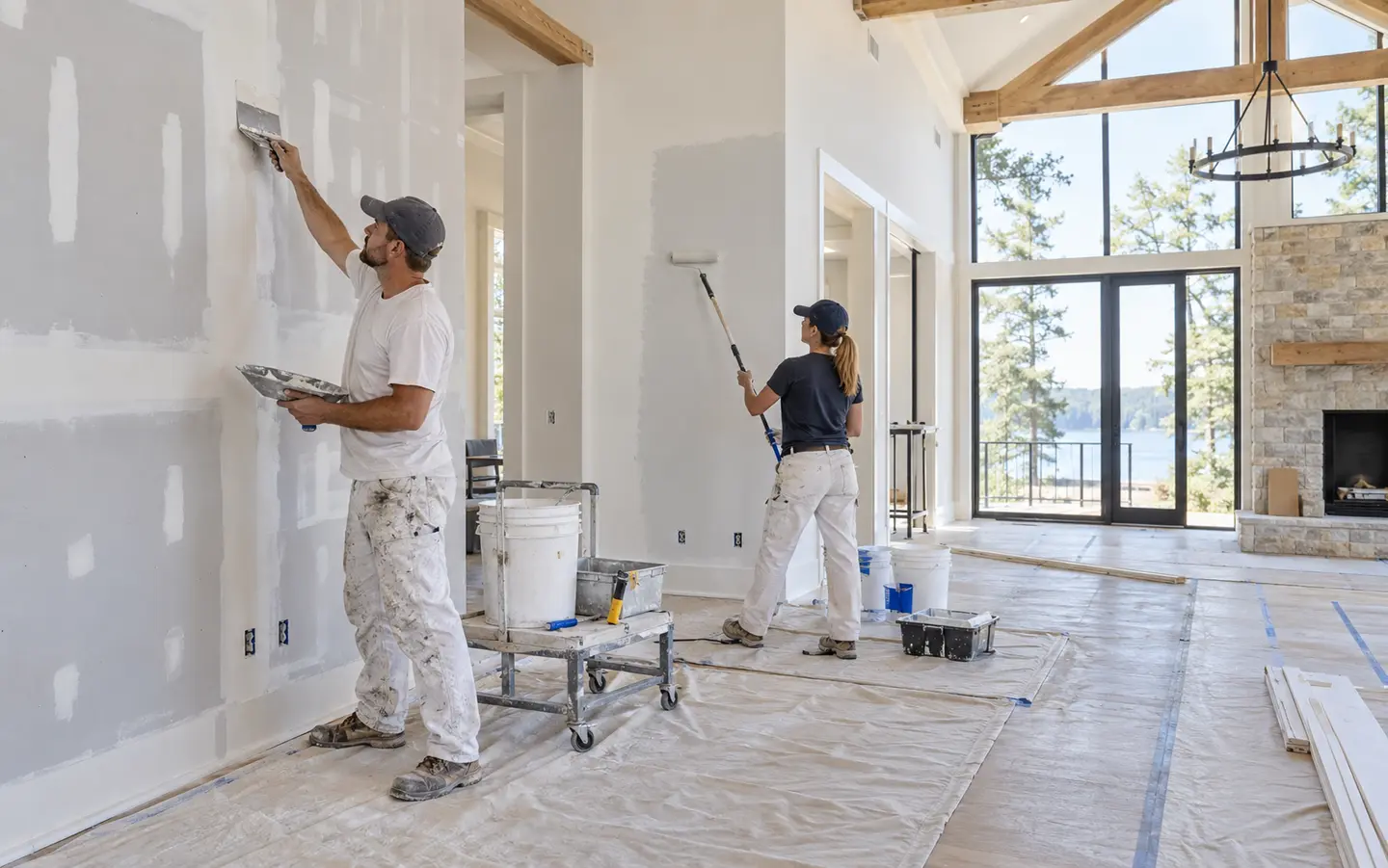
A successful new-construction finish depends on the sequence between drywall, primer, paint, trim, and punch work—not simply on completing each trade in isolation.
Define the complete finish scope first
Before board is hung, the team should confirm the rooms, walls, ceilings, board types, finish expectations, textures, primers, paint products, colors, trim, and responsibility for repairs. A clear scope helps builders compare proposals and prevents gaps between the drywall and painting phases.
Plans and square footage are useful, but ceiling heights, specialty details, access, scheduling, and lighting also affect the work. Reviewing these conditions early creates a more dependable material and labor plan.
Make sure the building is ready
Drywall should begin after required framing, rough mechanical work, inspections, insulation, and moisture-related conditions are addressed. Starting too early can lead to reopened walls, damaged board, or avoidable schedule changes.
Site access and interior conditions matter too. Material delivery, power, temperature, humidity, ventilation, and protection from weather all influence hanging, finishing, and drying.
Hang with the final surface in mind
Panel layout, fastening, joints, corners, openings, and transitions influence what the painted surface will look like later. Careful hanging gives finishers a better base and reduces unnecessary correction work.
Where new drywall meets masonry, trim, cabinets, or existing construction, the transition should be planned rather than improvised. Strong side lighting and tall open rooms deserve extra attention.
Allow the finishing system to develop
Joint treatment normally requires multiple stages, with appropriate drying between them. Rushing coats or sanding before material is ready can produce ridges, shrinkage, soft areas, or visible joints after paint.
The specified finish should match the room, lighting, texture, paint sheen, and project expectations. A higher finish level may be appropriate in demanding visual conditions, but it should be agreed upon before pricing and scheduling.
Use primer as the bridge to paint
New drywall compound and paper absorb coatings differently. A suitable drywall primer helps create a more uniform surface for the finish coats and gives the team another opportunity to inspect the walls under consistent lighting.
After primer, remaining touch-ups can be completed before finish paint. Trim, doors, cabinets, fixtures, flooring, and punch-list activity should be sequenced so completed surfaces are protected from unnecessary damage.
Coordinate one finish plan
When drywall finishing and painting are coordinated, the team can carry expectations from open framing through the final coat. Builders have a clearer contact for surface readiness, touch-ups, coating transitions, and final review.
That coordination does not remove the need for inspections or schedule discipline. It creates one documented finish path with fewer assumptions between trades and a cleaner handoff at completion.
Ready to discuss your property? Explore Builder & Developer Services or request a free estimate below.