The short answer
Level 4 is a common finish for many painted interiors, while Level 5 adds treatment across the full surface to improve uniformity in visually demanding conditions.
Finish levels create a shared expectation
Drywall finish levels help owners, builders, finishers, and painters describe the intended surface. They are most useful when the final texture, coating, sheen, lighting, and viewing conditions are discussed at the same time.
A level number alone cannot guarantee that every wall will look identical in every light. Framing, board installation, joint placement, surface damage, primer, paint, and workmanship all affect the finished appearance.
What Level 4 generally means
At Level 4, tape is embedded and joints, interior angles, fasteners, and accessories receive the specified finish coats before sanding and inspection. It is widely used where flat or low-sheen coatings and normal lighting conditions are planned.
The finish should still be matched to the project. Heavy texture, smooth walls, high ceilings, open plans, and critical light can change what is visible even when the same nominal level is specified.
What Level 5 adds
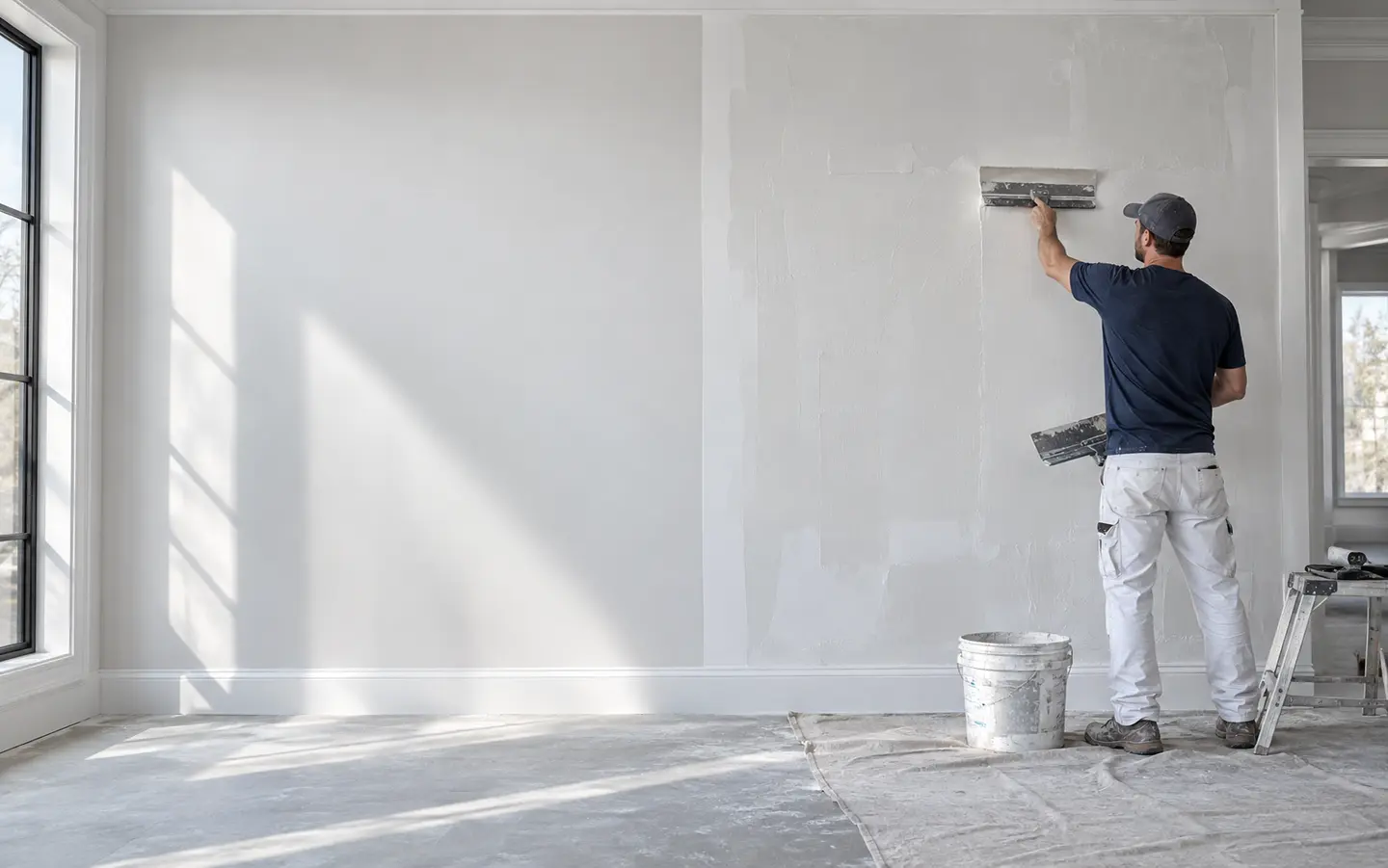
Level 5 adds a thin skim coat or approved treatment across the entire drywall surface after the Level 4 steps. This helps reduce differences in porosity and surface texture between joint compound and drywall paper.
It is often considered for smooth walls exposed to strong side lighting, large windows, glossy coatings, or other demanding visual conditions. It requires more labor, material, drying, and inspection time.
Lighting and sheen can decide the issue
Low-angle daylight can reveal joints and surface variation that are less visible under diffuse light. Long hallways, tall walls, stairwells, and large uninterrupted ceilings may be especially sensitive to the direction of light.
Higher-sheen paint tends to reflect more light and can emphasize imperfections. Product selection, color, and application method should therefore be considered alongside the drywall finish—not after it.
Choose based on the room, not prestige
Level 5 is not automatically necessary throughout an entire property. Some rooms may perform well with Level 4, while a feature wall or highly illuminated ceiling justifies additional treatment.
The best decision balances design intent, viewing conditions, schedule, and budget. Ask the drywall and painting team to identify the surfaces where added finishing will make a meaningful difference.
Write the expectation into the scope
A useful proposal states the planned finish, texture, primer, paint sheen, and any critical-light areas. Sample sections or mockups can help decision-makers agree on appearance before the full project proceeds.
Clear documentation is especially valuable on new homes, commercial interiors, and remodels where several trades influence the same wall or ceiling.
Ready to discuss your property? Explore Drywall Installation & Repair or request a free estimate below.