The short answer
Commercial painting works best when the project scope and operating schedule are planned together. Access, occupants, customers, deliveries, safety zones, drying time, and handoffs all influence how the work should be phased.
Begin with the building's real operating pattern
A useful walkthrough should identify busy hours, restricted spaces, public entrances, loading areas, occupied units, classrooms, worship schedules, guest turnover, and any areas that cannot be taken out of service at the same time.
The painting plan can then organize work by floor, wing, room type, elevation, unit group, or operating window. This gives decision-makers a clearer picture of how the project will move through the property.
Define preparation and repairs before finish coats
Drywall damage, failed caulk, peeling coatings, wall damage, wood rot, siding damage, stains, and surface contamination can change both the schedule and product plan. Those conditions should be identified early instead of after crews are mobilized.
The proposal should separate preparation, repairs, priming, and finish work clearly. That makes it easier to coordinate responsibilities and understand what must be completed before each area is reopened.
Plan around each facility type
Hotels and apartment complexes may need room or unit sequencing, protected common areas, and turnover coordination. Churches and schools may require work around services, classes, events, and seasonal breaks. Retailers and offices often benefit from phased work outside peak customer or staff activity.
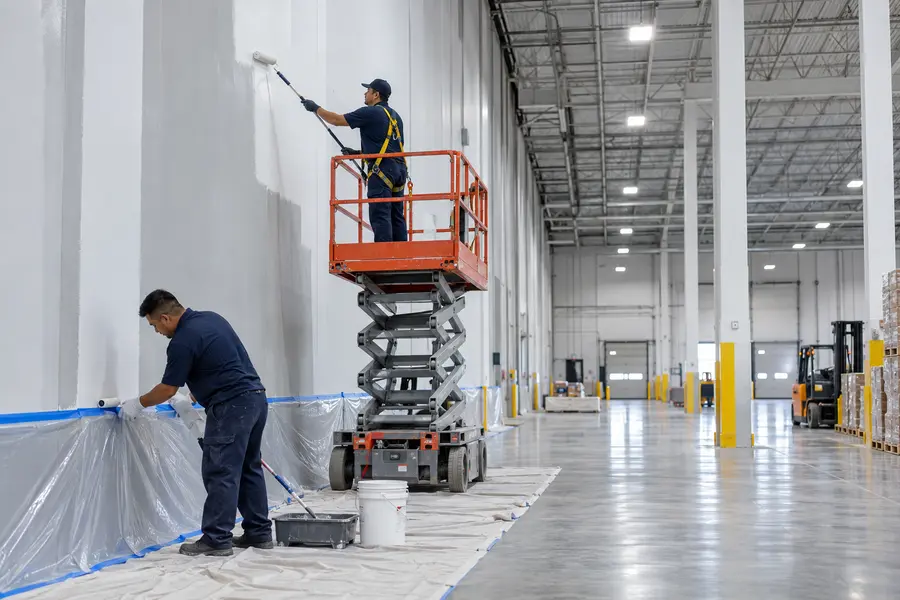
Warehouses and distribution centers require attention to equipment, storage, traffic lanes, high walls, lift access, loading schedules, and active operations. Hospitals and medical offices may need additional discussions about occupied areas, lower-odor coating options, and controlled work zones.
Communication reduces avoidable disruption
Before work begins, identify the project contact, daily access process, areas scheduled next, furniture or equipment responsibilities, color approvals, change-order process, and how completion will be reviewed. Short, consistent updates help property representatives prepare occupants and staff.
Clear signage and protected work zones may also be appropriate depending on the facility. The goal is to keep the work understandable to the people using the building, not only to the painting crew.
Build the estimate around measurable areas
A commercial estimate is more useful when it identifies buildings, elevations, rooms, surfaces, quantities, coatings, repairs, access equipment, exclusions, and planned phases. A vague total makes comparison difficult and can hide important differences between proposals.
FullScope provides commercial painting, drywall, pressure washing, preparation, and repair services throughout the Lake Norman area, Catawba Valley, and High Country, with planning tailored to the facility and its schedule.
Ready to discuss your property? Explore Commercial Services or request a free estimate below.